Montenegro by car in 5 days: a route you can actually drive
Updated:
The route: Tivat, then Kotor and the Lovćen serpentine, Budva and Sveti Stefan, Lake Skadar, and Perast on the way back to Tivat. Five days, none of them ending with a drive in the dark.
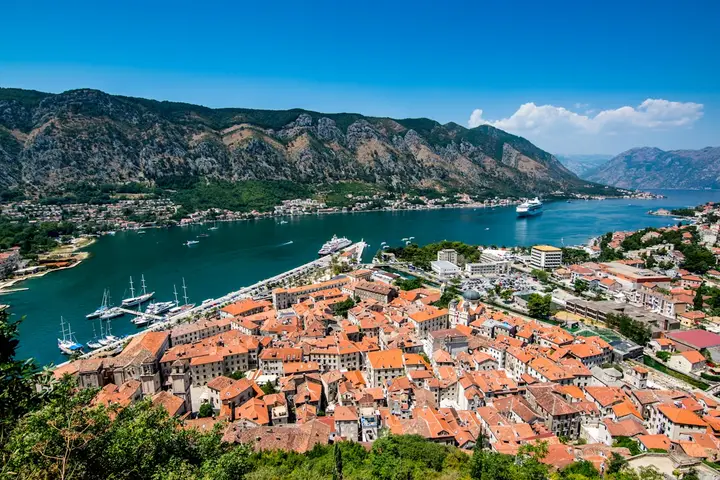
Montenegro is tiny — 13,800 square kilometres, about the size of Northern Ireland. You look at the map, see twenty-two kilometres from Kotor to Budva, an hour to Lake Skadar, and it feels like five days is enough to drive the country twice.
The map is lying. Not about distance — it is honest there. It lies about speed. Almost every road here either hugs the sea or climbs through the mountains in hairpins, and in July those same twenty-two kilometres can easily take an hour. That is why the “ten sights in one day” itineraries you find online end with you driving in the dark, having seen nothing.
Below is a five-day route where every day ends before sunset. The distances are deliberately short: in Montenegro the road is more interesting than the destination.
Why this route does not work without a car
Buses in Montenegro run along the coast and connect the larger towns: Herceg Novi, Kotor, Budva, Bar. That is the whole network. Lovćen, Njeguši, the viewpoints above Lake Skadar — public transport either does not go there at all or goes once or twice a day.
A bus between coastal towns costs €3–9, but it does not go to the stops on this route. A taxi is the most expensive option: in season you agree the fare for every ride before you get in, and two or three rides a day cost more than a day of car rental — from €25 in low season, and in July and August about twice the May price — without the freedom to stop wherever it looks good.
Which gives a simple rule: if your trip is only a beach in Budva, you do not need a car. If the mountains are in your plans, you do — and for this route, for all five days.
Day 1. Tivat: landing and the bay
Almost everyone lands in Tivat — the airport sits right by the sea, 20 kilometres and half an hour from Budva, 7 kilometres and fifteen minutes from Kotor. The car is brought to the terminal and handed over in the car park opposite the exit.
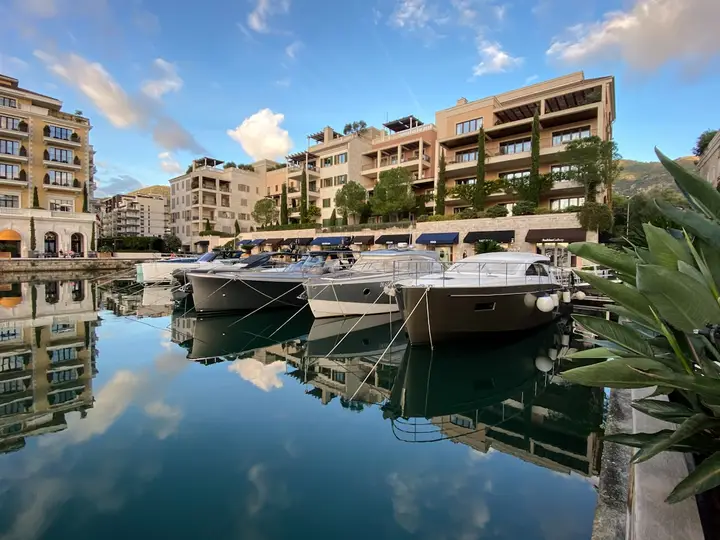
Do not overload the first day. Check in, walk to Porto Montenegro — the marina where the boats you normally only see in films are moored — and have dinner on the promenade. That is enough.
Worth knowing. Pick the car up at the airport, not in town the next day: in season the morning slots go first. We walked through the booking process step by step in a separate piece — how to book a rental car online.
Day 2. Kotor and the Lovćen serpentine
The key day. Morning in Kotor: the old town inside its walls and the climb to the Fortress of St John — 1,350 steps, €15 entry, best done before nine while it is still cool. How to fit the town into one day is in Kotor in a day.
Then comes the reason people rent a car at all. From Kotor a serpentine road climbs towards Lovćen: twenty-five hairpins, and with every one the bay below opens wider. There are pull-offs halfway up, and they are where the classic shots of the bay from above are taken. At the top are Lovćen National Park (€3 entry) and Njegoš’s mausoleum (€8; open from 15 April to 15 November, closed in winter). The drive, bend by bend, is in the Kotor–Lovćen serpentine.
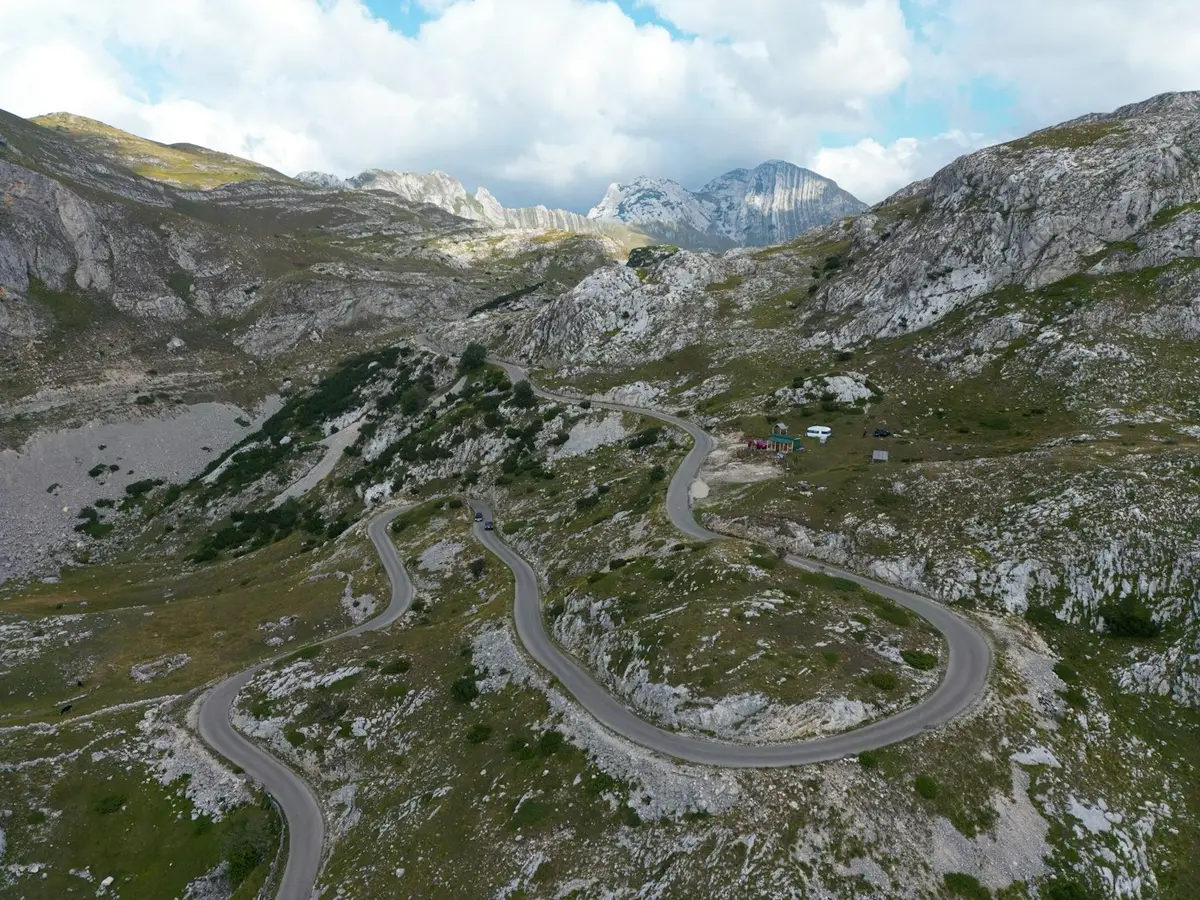
Worth knowing. The road is narrow, in places single-track with passing places. Drive slowly, first or second gear, give way at the pull-offs. If you rarely drive or dislike heights, go up the normal road via Cetinje instead — the view is nearly the same. There is also the Kotor–Lovćen cable car: €25 return, 11 minutes, and it lifts you to 1,300 metres.
You cannot drive into Kotor’s old town. Parking along the waterfront by the walls is €4.80 an hour in summer and €2.40 in winter; the outer car parks start at €0.90.
Day 3. Budva and the coast
Budva is the centre of the coast: an old town on a headland, beaches, evening life. Morning for the walls and Mogren beach behind them, afternoon for a short drive along the sea to Sveti Stefan: 9 kilometres, 15 minutes.
The island itself is a hotel, which reopened on 1 July 2026 after five years shut. Non-guests can get in on a guided tour, booked in advance; check the price and times beforehand. The viewpoint above the island is one of the most photographed spots in the country, and it is free. Parking below costs €2–4 an hour. More in Sveti Stefan.
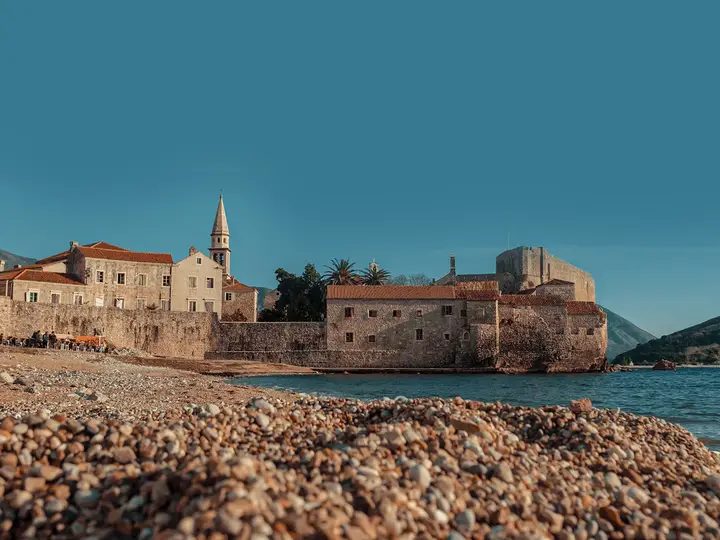
Worth knowing. Parking in Budva in July and August is the local headache. There is none in the old town; you park in the paid lots up the hill. An hour costs €1–2, up to €3 near the Old Town, and you pay around the clock, weekends included. An unpaid session costs you €50.
Day 4. Lake Skadar
A change of scenery: away from the sea, inland. Budva to Virpazar is about 43 km, roughly an hour via the Sozina tunnel (€2.50). From Podgorica it is closer — 25 kilometres, around half an hour.
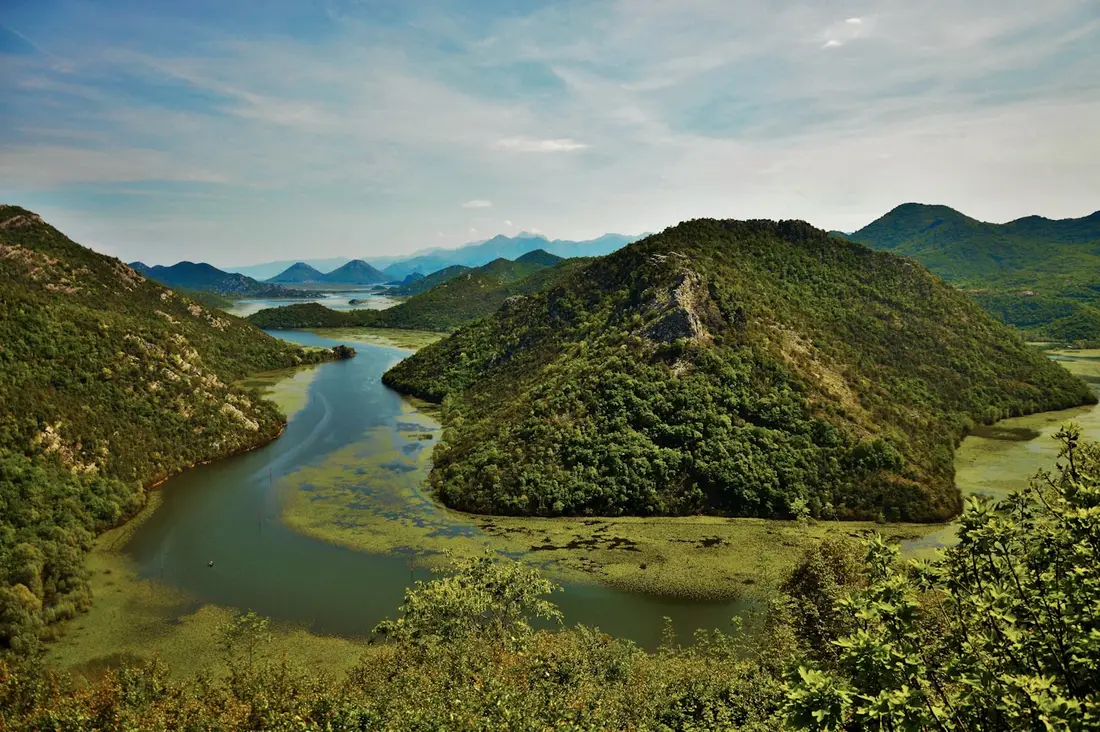
It is worth a detour to the Pavlova Strana viewpoint: the Crnojevića river makes an almost closed loop there, and it is one of the most recognisable views in the country. Boats leave Virpazar for two or three hours among the water lilies and birds. The national park fee is €5, and a seat on a group boat is €15–25 per person. More in Lake Skadar and the Crnojevića river.
Worth knowing. The road around the lake is narrow in places and has no barriers. Allow more time than the navigation app suggests.
Day 5. Back to the sea
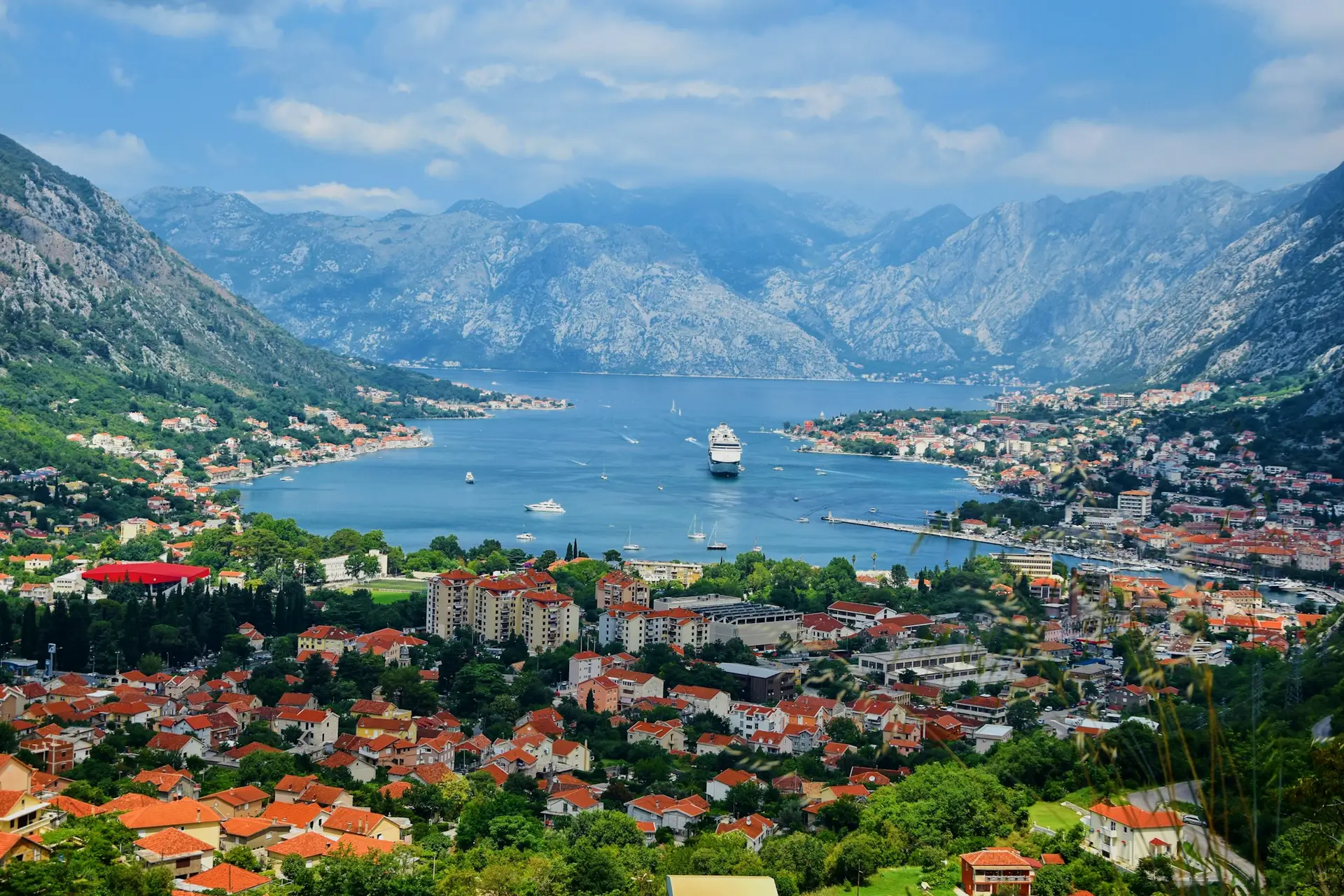
The last day depends on where you fly from. If it is Tivat, drive back along the Bay of Kotor and take the Kamenari–Lepetane ferry: under ten minutes on the water, €5 for a car. It saves about 30 kilometres and anything from half an hour to an hour, depending on the traffic around the bay.
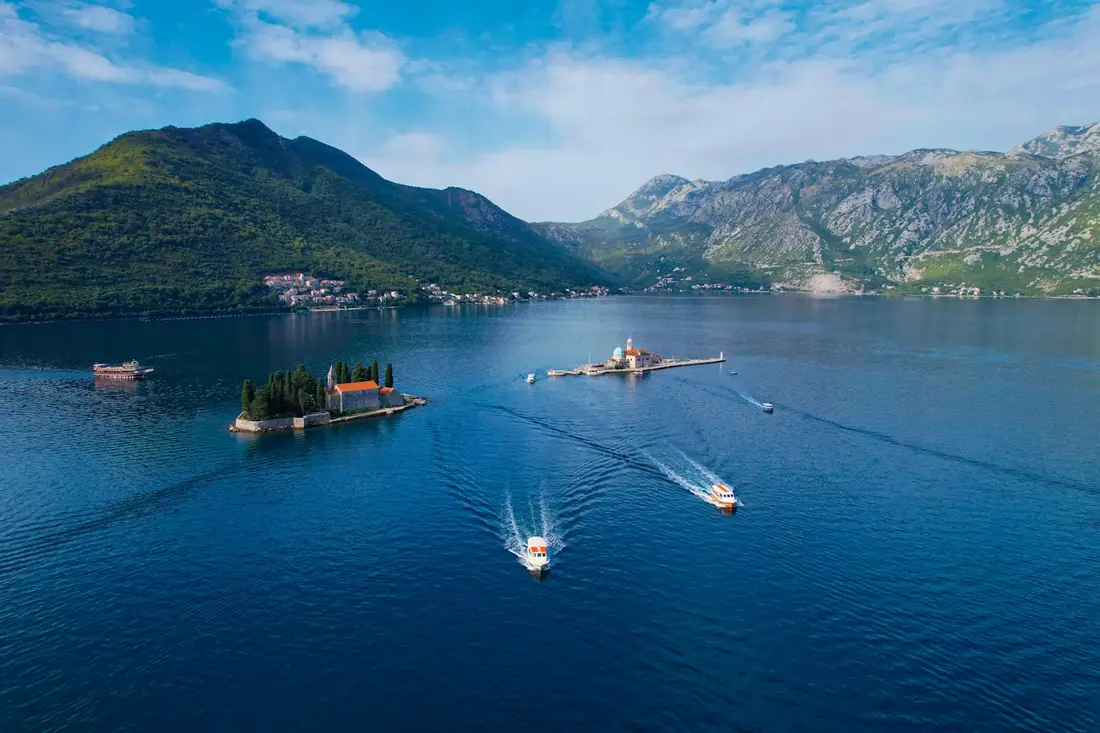
If there is time left, stop in Perast: a small stone town where boats leave for Our Lady of the Rocks, an island built up by hand over several centuries. The boat there and back is about €5.
What to know about the roads
- There are two toll roads: the Sozina tunnel between Podgorica and the coast, €2.50, and the motorway north, €3.50 for the full stretch. Plus the ferry across the bay, €5 for a car.
- The rules are European, the driving style is local: not everyone indicates, and there are speed cameras on the main roads. A new road traffic law has applied since 7 August 2026, and fines have gone up two- to threefold: from €60, and from €150 for seat belts and phones. Details in driving rules in Montenegro.
- Petrol stations are everywhere along the coast, rarer in the mountains. Fill up before heading to Durmitor or the north. In autumn 2026 petrol costs about €1.75 a litre.
- Parking is paid: Kotor from €0.90 an hour at the outer car parks to €4.80 by the Old Town walls, Budva €1–2 (up to €3 near the Old Town), Sveti Stefan €2–4. In Kotor and Budva you pay around the clock. Paying by text message only works with a Montenegrin SIM. Details in parking in Montenegro.
If you can add a day
This route deliberately leaves out the north — the Tara canyon, the Đurđevića bridge and Durmitor. You can do it as a day trip from the coast, but it will be twelve hours with eight of them behind the wheel: Budva to the bridge is about 185 kilometres, four hours each way. It is more honest to add a sixth day and sleep in Žabljak, 160 kilometres and 3–3.5 hours from Budva.
In autumn 2026 Đurđevića bridge is closed for reconstruction until 26 October, though it is expected to reopen sooner. Check before you go.
And if you would rather slow down instead — swap a driving day for a boat: out of Kotor or Tivat, the Blue Cave (Plava špilja) and a swim somewhere you cannot reach from shore. The boat stops at the mouth of the cave; you go in by kayak or swim in from the boat — engines have been banned inside since 2026.
Prices checked in September 2026. They change from season to season — if you spot a difference, let us know.
Comments
No comments yet — be the first.