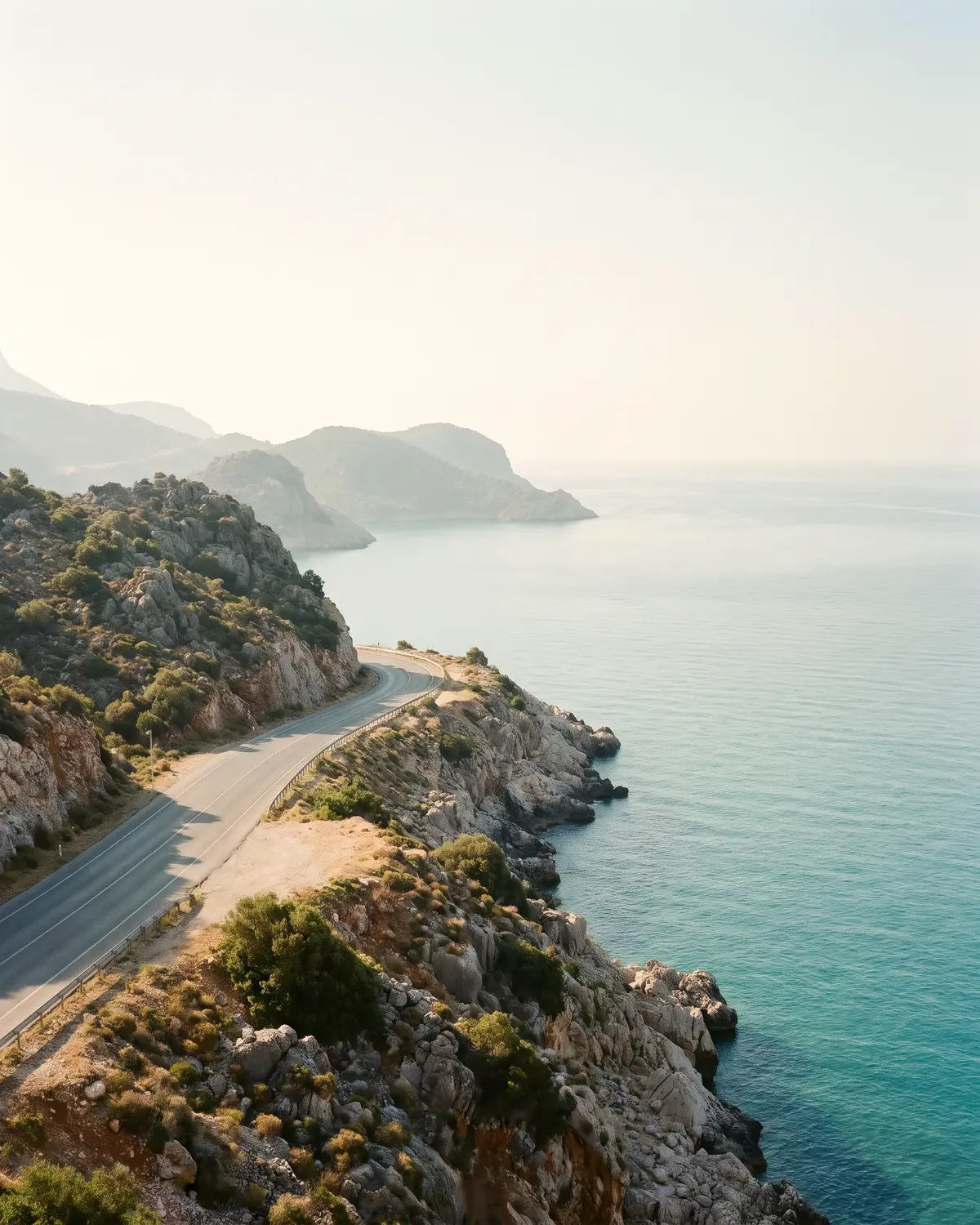
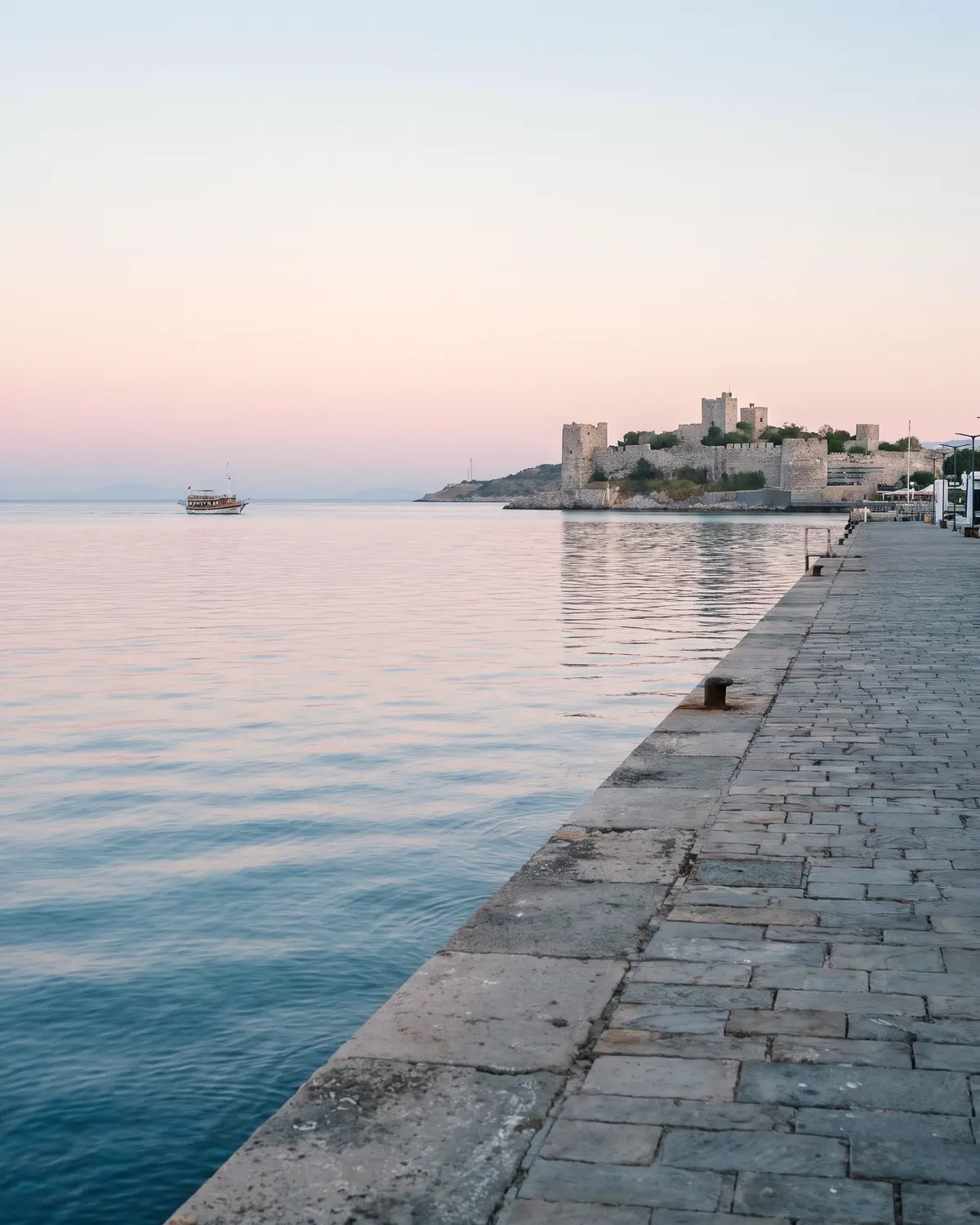
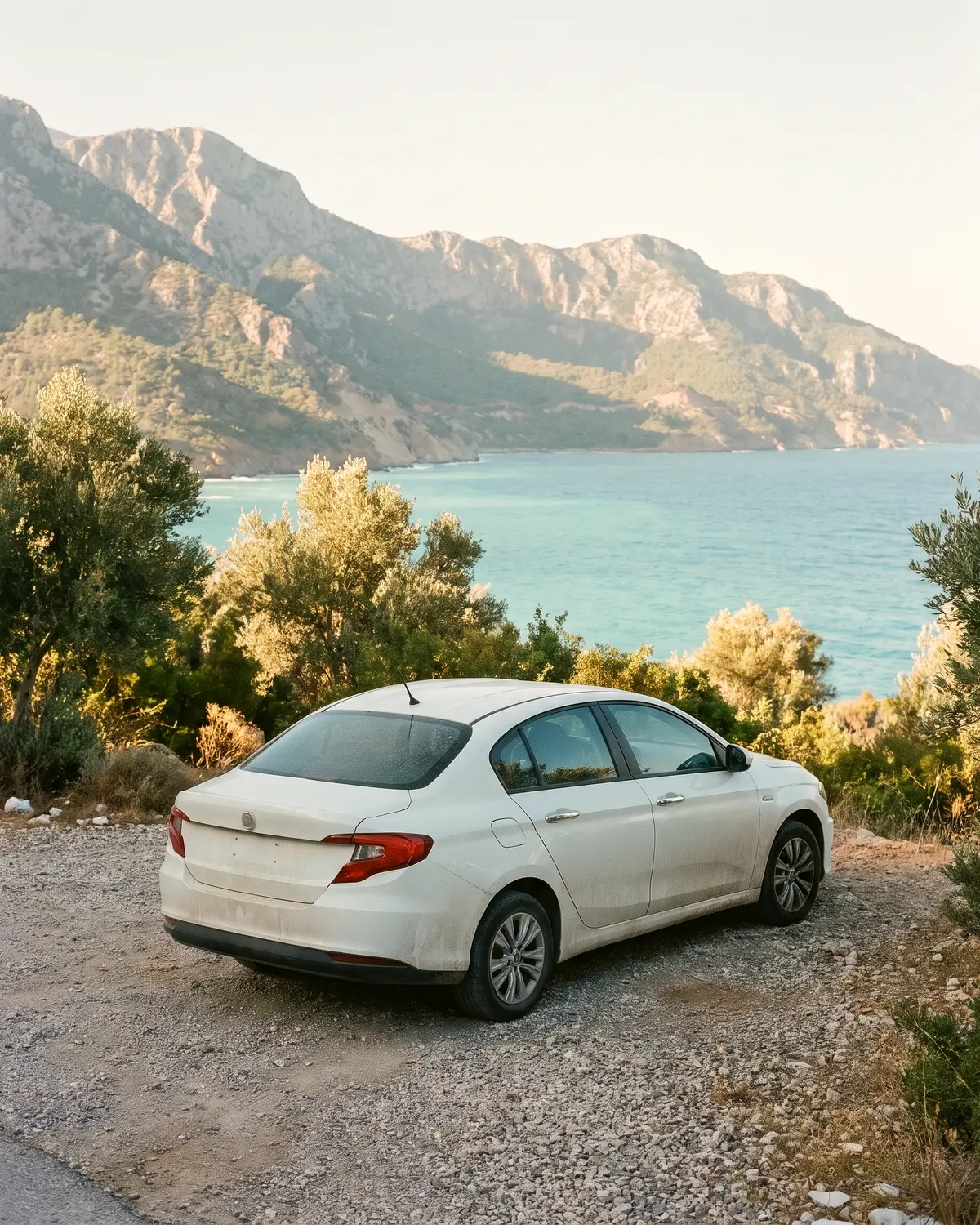
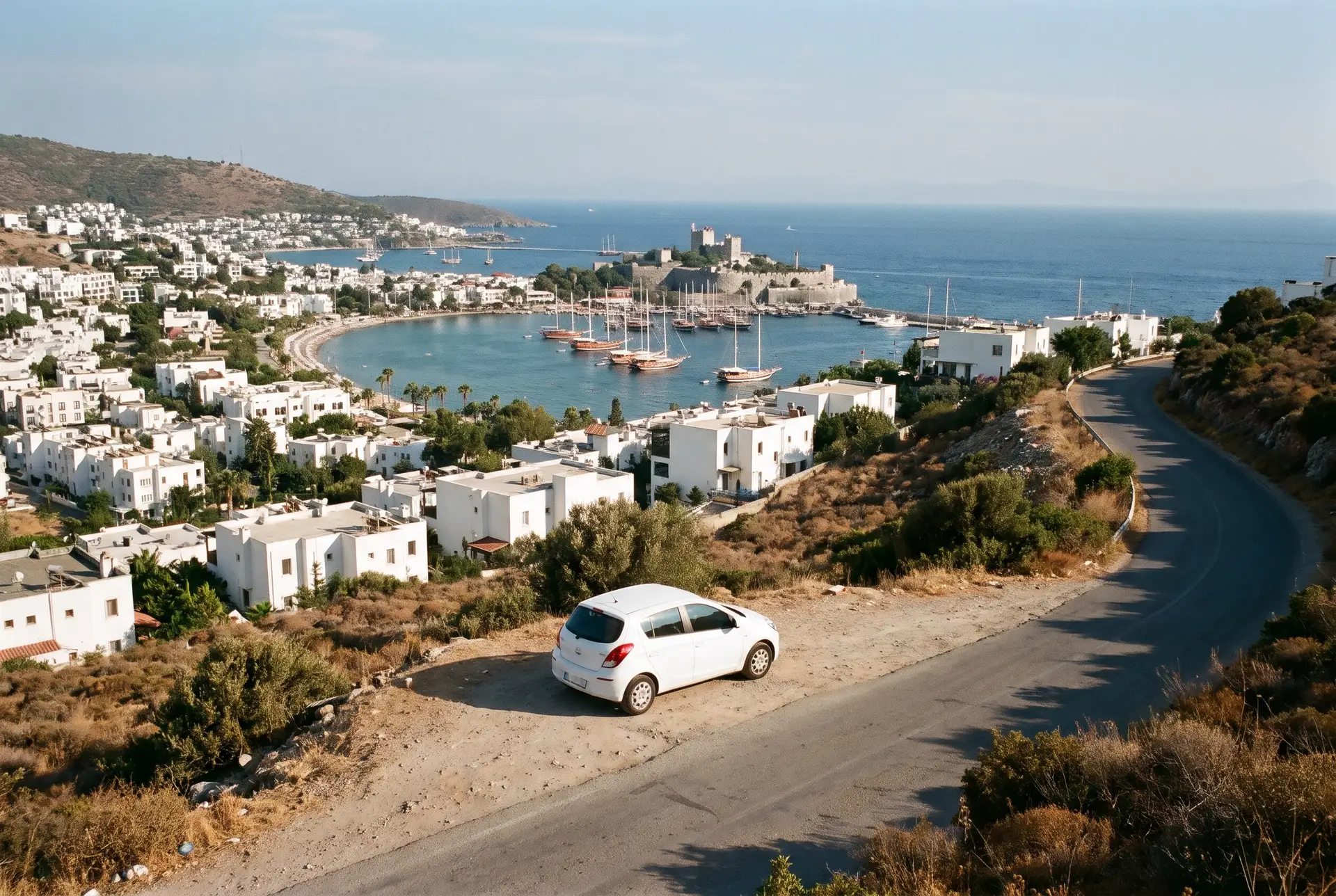
 Image generated by AI
Turkey
Car rental in Turkey
From €13 a day on a 7-day rental and from €16 for a single day, as of November 1, 2026: six cities with an airport, hotel delivery, and some cars with no deposit.
from €13 per day on a 7-day rental
from €16 for a single day, as of November 1, 2026
Search and book
A live catalogue with prices and availability for your dates. You pay part of the total when you book and the rest on collection. Your rental contract is with the rental company.
Ad · companies may pay Roamo for referrals
Do you need a car in Turkey?
Not everyone does. If you are flying to one hotel for a week by the pool, a car will sit in the car park. For a day in old Istanbul it is more hindrance than help — traffic, one-way streets and paid parking.
A car pays off when you want to see more than the beach in front of the hotel: Termessos and the waterfalls near Antalya, the canyons above Alanya, the bays around Fethiye, and ancient Ephesus and Miletus near Izmir. Turkish roads are good, signposting is clear and much of it is repeated in English, and the local driving style stops being a shock within a few hours. Traffic drives on the right.
How much does it cost to hire a car in Turkey?
Car hire in Turkey starts from €13 a day on a 7-day rental and from €16 for a single day, as of November 1, 2026. Across the country, summer hire costs roughly twice as much as in February. Each city has its own pattern, though: Antalya and Istanbul are dearest in May, Bodrum and Dalaman in June and July.
A crossover costs more than an economy car and a people carrier more again, and in summer expect roughly double the winter rate. Starting prices by city on a 7-day rental: Antalya from €13, Dalaman from €21, Izmir from €21, Alanya from €22, Istanbul from €23 and Bodrum from €26. The exact amount for your dates is calculated by the rental company.
Hire is shown and charged in euros, and on the spot companies accept euros or lira, whichever you prefer. Fuel, parking and tolls are paid in lira: €1 is about 55–56 lira and $1 about 50 lira (late October 2026). For petrol stations and parking attendants, carry some cash in lira.
Where can I pick up a hire car?
You can collect the car at the airport, at the company’s office or have it delivered to your hotel — the options differ from car to car and are shown when you book. There are six cities with an airport: Antalya (AYT), Istanbul (IST and SAW), Alanya (Gazipaşa, GZP), Bodrum (BJV), Dalaman (DLM, the airport for Fethiye) and Izmir (ADB).
When you collect, walk round the car, film it and check that every scratch is on the handover sheet. A night-time handover may cost extra, and if there is no car in your city the system will offer delivery from elsewhere — check the total. Returning the car in another city is possible if its conditions allow.
What do I need to hire a car in Turkey?
You need your passport, your driving licence and a bank card, plus the voucher when you collect. The licence must be a national one with details in Latin script; it is valid for 6 months from the date you enter Turkey. From 21–23 with 2–3 years’ driving the choice is wide, and with less than a year’s experience you cannot hire at all. The minimum rental is 24 hours, and a part day counts as a full one. The full list of documents and age rules is in our guide to hiring a car in Turkey.
UK licence holders have a clear answer on the International Driving Permit: the UK government says you need a 1968 IDP, or your UK licence notarised in Turkish, and the 1949 IDP is no longer accepted. Rental desks often ask only for the licence, but get the IDP before you travel: it is sold at PayPoint outlets and cannot be bought outside the UK.
You pay 15–20% by bank card when booking and the rest on collection. Some cars have no deposit, many have one of up to €300, and many need no credit card; where one is required, it must be a physical card with embossed numbers in the main driver’s name. Basic insurance is included, but not for the wheels, underbody, windscreen or interior — our guide to car hire insurance and deposits in Turkey explains what is covered and how to get the deposit back.
Visa, phone and money for UK and EU visitors
British citizens can visit Turkey without a visa for up to 90 days in any 180, on a passport with at least 150 days left from the date of entry and one blank page. Travellers on other passports should check the rules for their nationality: the general rule from Turkey’s foreign ministry is a passport valid at least 60 days beyond the stay, and six months is the safe margin.
Turkey is outside EU roaming, so UK and EU SIM cards are charged at non-EU rates — check your network’s Turkey tariff before you go. Local prepaid SIMs are sold by Turkcell, Vodafone and Türk Telekom — Turkcell is the one usually recommended for road trips into remote areas; you need your passport, and an official shop in town charges less than the airport or a hotel. A phone bought outside Turkey works with a Turkish SIM for 120 days before it is blocked.
The currency is the Turkish lira (TRY, ₺). The rental company needs to reach you on your phone number for the whole rental and the day before, usually by WhatsApp, Viber or Telegram.
Turkish roads: tolls, parking, fuel
The limits are 50 km/h in towns, 90 outside them and 120 on motorways, with 30 near schools; follow the signs. Motorways, the Bosphorus and Dardanelles bridges and the Eurasia Tunnel are tolled, and the toll is paid automatically by the HGS sticker that almost every hire car carries — but ask the company to activate it. The total comes off your deposit on return. A Bosphorus bridge costs about €1–2 (59–110 lira) each way, the Osmangazi or Çanakkale bridge about €21 (1,170 lira), and the whole Istanbul–Izmir motorway 2,895 lira (about €52). Amounts are as of 1 November 2026. The coastal D400 from Antalya to Dalaman and most resort roads are free, except for the tolled Göcek Tunnel between Dalaman and Fethiye, with the old road over the pass running alongside it. Tariffs, fines and how HGS works are in our guide to toll roads, HGS and fines.
In resort centres parking is paid: you pay an attendant in a vest, and the first 15 minutes are usually free. At shopping centres and in residential streets it is free. Keep off yellow kerb markings — cars are towed. City by city, see our guide to parking in Turkey.
On 1 November 2026 petrol costs around 80–83 lira a litre (roughly €1.45–1.50) and diesel around 100–103 lira (roughly €1.80): Istanbul is at the low end, Antalya at the high end, and in Turkey diesel is dearer than petrol. A 50-litre tank of petrol comes to about 4,000–4,150 lira, or roughly €72–74. At most stations an attendant fills up for you, and cash payments are in lira only.
Where to go in Turkey by car
The Mediterranean coast: from Antalya, the old town of Kaleiçi, the Düden waterfalls and Termessos in the mountains; from Alanya, Sapadere Canyon, the Manavgat waterfall and the theatre at Aspendos. Further west are Fethiye, Ölüdeniz, Saklıkent and Xanthos, easiest with a car from Dalaman.
The Aegean coast: the Bodrum peninsula with Gümüşlük and Yalıkavak, Ephesus, Miletus and Priene, and Çeşme and Alaçatı near Izmir. Our road trip from Antalya to Bodrum and Izmir links the two coasts in eight days. Long drives — Antalya to Pamukkale (235–250 km, 3–4 hours) or Cappadocia (about 615 km, around 8.5 hours) — are trips of several days; for the mountains in winter, add the winter package when you book. Winter tyres are not compulsory for private cars, and on the coast ordinary tyres are usually enough in winter.
From Istanbul there is the Bosphorus, the Belgrad Forest and Yoros Castle, and beyond that the whole country: hire cars may go anywhere in Turkey, but check the mileage limit. If the Caucasus is next on your route, hire a car for Georgia once you are there: a Turkish hire car cannot cross the border, as our guide to taking a hire car out of Turkey explains.
What can go wrong: fines, tolls, insurance
Traffic fines in Turkey rose sharply in 2026: holding a phone at the wheel costs 5,000 lira (about €90), drink-driving 25,000 lira (about €450) plus losing your licence; pay within a month and you get 25% off. The limit is 0.5 promille, but the safest choice is not to drink at all. Camera fines go to the rental company, which passes them on to you.
A red light at a toll gate is not a ban: you have 15 days to pay the debt without a penalty. From day 16 to day 45 one extra toll is added, and after that four. Standard insurance does not cover glass or wheels, and after an accident without a police report the insurance will not pay. In Istanbul, unofficial ‘parking attendants’ take money with no guarantee at all — use official car parks only.
In winter the coast is quiet: some hotels and cafés close, but car hire is at its cheapest. The swimming season runs roughly from May to October, and in warm years into early November.
Car or bus?
Long-distance buses run between the big cities, and buses and transfers serve the airports. If you are staying in one hotel and going out once or twice a week, that is enough.
A car wins when there are many places to see and they lie off the main roads: ancient cities in the mountains, bays with no bus, villages around Fethiye and Bodrum. The easiest plan is to collect it at your arrival airport and not spend the first day getting to the hotel.
Good to know
See the price before you pay
The catalogue shows the total for your dates before you pay, along with the deposit and rental terms.
Deposit-free options
Some cars have no deposit and many have one of up to €300; many need no credit card either.
Six airports
Antalya, Istanbul, Gazipaşa, Bodrum, Dalaman and Izmir — the car is handed over as soon as you land.
How it works
Pick dates and a class
See what is available on your dates and compare price, deposit and mileage limit.
Book with the rental company
You pay 15–20% by bank card when booking and the rest on collection. We do not see or store your card details.
Collect the car
At the airport, an office or your hotel. Ask for the HGS sticker to be activated for toll bridges and motorways.
Conditions
- Driving licence
- A national licence with details in Latin script is valid for 6 months from entry, so UK and EU licences meet the rental rule; the UK government says British drivers also need a 1968 International Driving Permit or a licence notarised in Turkish. Copies and digital licences are not accepted, and the licence must be valid until the end of the rental.
- Age and experience
- From 21–23 with 2–3 years’ driving the choice is wide; from 18–19 with one year there are only a few cars, and the whole fleet opens up at 25 with five years. Under a year’s experience, no car. The exact requirements are on each car’s page.
- Deposit
- Some cars have no deposit; on many it is up to €300. It can be paid by card or in cash — the car’s page says which. Many cars do not need a credit card.
- Insurance
- Basic insurance is always included. It does not cover the wheels, the underbody, the windscreen or the interior, so windscreen cover is advised for the mountains. After an accident, tell the company at once and get a police report, or the insurance will not pay.
- Driving abroad
- Not allowed: a hire car cannot leave Turkey for the neighbouring countries or the Greek islands. Within Turkey you can drive anywhere, but on tarmac only.
- Fuel
- Return the car with the same fuel level as at collection. Any shortfall is charged at the company’s rate, and extra fuel is not refunded.
- Season
- Demand for hire cars is high from May to October and peaks from July to September, so book ahead for those months. January and February are cheapest, at roughly half the July rate.
By city
Common questions
How much does car hire in Turkey cost?
From €13 a day on a 7-day rental and from €16 for a single day, as of November 1, 2026. Summer costs roughly twice as much as winter. On a 7-day rental prices differ by city: Antalya from €13, Dalaman from €21, Izmir from €21, Alanya from €22, Istanbul from €23 and Bodrum from €26.
Do I need an International Driving Permit in Turkey?
On a UK licence, yes. The UK government says you need a 1968 International Driving Permit, or your UK licence notarised in Turkish; the 1949 IDP is no longer accepted. Rental desks often ask only for the licence, but get the IDP before you travel: it is sold at PayPoint outlets and cannot be bought outside the UK. EU licences are in Latin script and meet the rental companies’ rule for 6 months from entry; the period restarts each time you re-enter Turkey.
Can I hire a car without a deposit or a credit card?
Yes: some cars have no deposit, and on many it is up to €300. Not every car needs a credit card — the booking page shows which do. You pay 15–20% by bank card when booking and the rest to the company on collection.
Can I drive a hire car to Greece, Bulgaria or Georgia?
No. A rental car cannot leave Turkey — the neighbouring countries and the Greek islands are only reachable without it.
How do I pay tolls on motorways and bridges?
Automatically: almost every hire car has an HGS sticker, so ask the company to activate it. The total is deducted from your deposit on return, together with a service fee. There are no vignettes.
Which side of the road do they drive on in Turkey?
On the right, and overtaking is on the left only. Limits are 50 km/h in towns, 90 outside them and 120 on motorways, with 30 near schools; always follow the signs.
Can I cancel for free?
Yes, up to 7 days before pick-up (30 days for convertibles and luxury cars), or up to 24 hours with the free-cancellation option. A 6% payment fee is kept, and the advance is refunded within 14 days.