Parking in Turkey: markings, İSPARK and towing
Updated:
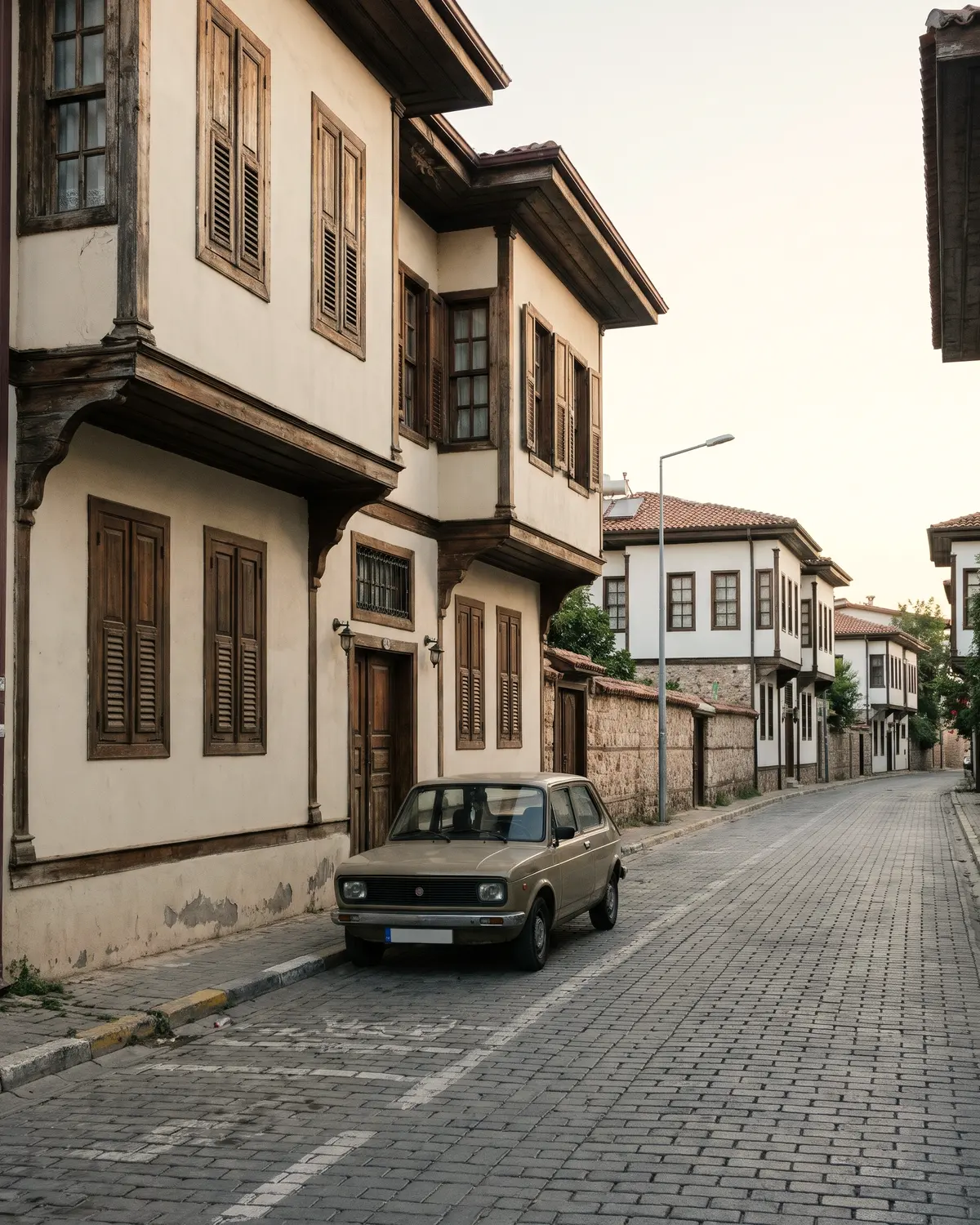 Image generated by AI
This guide was prepared by AI from official sources as of the date shown. Rules change, so check the official website before you travel.
In the centre of Turkish resorts, parking is paid: you hand the money to an attendant in a vest, and the first 15 minutes are usually free. At shopping centres and in residential streets away from the beaches, parking is free. Stay off yellow kerb markings and pavements, and do not double-park, because those three get you towed.
What you pay depends on the city and the car park, so read the board at the entrance. In Istanbul, the İSPARK website and app show the tariffs too.
On 1 November 2026 parking in a prohibited place costs 1,246 lira, about €22, and towing is charged on top. Fines and parking fees are the hirer’s to pay.
How do I read the signs and kerb markings?
There is no single colour code, and each city does things its own way. These are the general pointers:
| What you see | What it means |
|---|---|
| Blue “P” sign | paid parking, often with a tariff board nearby |
| White and blue “Otopark” sign | municipal car park |
| Yellow line at the kerb | no parking, cars get towed |
| Yellow markings in Antalya and Alanya | can also be taxi spaces, also off limits |
| Blue markings in Istanbul | paid, usually with a 2-hour limit |
| Blue line by Cleopatra Beach in Alanya | roadside parking, often free |
| “Park Yapılmaz” | no parking |
| The letter “D” | bus stop, no parking |
If you are unsure, look at the neighbouring cars and any attendant nearby, but trust the sign above all. A car that has parked where everyone else has will still be taken away if the markings forbid it.
Who do I pay, and how?
An attendant in a yellow or orange vest. This is the usual arrangement on the street. You normally pay in advance, in cash, in lira. The first 15 minutes are generally free.
A pay machine or terminal. You will find these in city centres. At car parks with a barrier, you take a ticket and pay at a terminal before you leave.
Covered, guarded car parks. Hold on to the receipt until you drive out. Private and covered car parks are safer but cost 2–3 times as much as municipal ones, though they do offer daily rates.
Carry small notes, because not every attendant gives change.
Watch out for unofficial “attendants”. In Istanbul you may meet people who take money with no right to do so. They guarantee nothing, and your car can still be towed. Use only official car parks with an “Otopark” sign. At free car parks by the beaches in Alanya, someone may offer to “keep an eye on” your car for a few lira, which is not a parking charge.
Parking in Istanbul: how does İSPARK work?
The tariff at İSPARK’s municipal car parks depends on the district and the type of car park: covered, open or on-street. It is shown at the entrance and on the İSPARK website and app.
- Municipal “otopark” sites sit under white and blue signs, and in the centre there is often a 2-hour limit.
- There are underground car parks near Taksim, the Galata Bridge and Sultanahmet.
- In old quarters such as Balat and Fener, only a compact car will do.
The rule for Istanbul is simple: if you are going to see the old city, leave the car at your hotel. Parking in Fatih and the other historic districts takes time to find and adds up over a day.
Parking in Antalya
Paid car parks are marked with a “P” on a blue background. The first 15 minutes are usually free, and you pay an attendant or a machine. Yellow markings here indicate taxi spaces. You can park for free in residential streets further from the beaches and at shopping centres.
For the old town, Kaleiçi, the handiest option is the underground Cumhuriyet Meydanı Kapalı Otoparkı. By Konyaaltı beach there is a large car park about 150 metres from the sea, next to the Konyaaltı town hall. For several days, use a covered car park with a daily rate. There is more about the city and its surroundings in our guide to Antalya by car.
Parking in Alanya, Bodrum, Fethiye and Izmir
Alanya. In season, the centre and the beaches are hard work. Roadside parking is often free, for example on the stretches with a blue line by Cleopatra Beach. Pavements are the main reason cars get towed. Paid car parks use a machine or cash to an attendant.
Bodrum. You need patience in the centre, where the streets are narrow and one-way. You can park for free at the Migros MMM supermarket, 7–10 minutes’ walk from the marina, and on Neyzen Tevfik street behind the marina, at the junction with Fuat Imsık, though those spaces go early. Paid street spaces have white and green signs, and staff take payment by terminal and give a receipt. By Gümbet beach, the free car parks fill up by 8–9 in the morning.
Fethiye and Ölüdeniz. Summer is difficult. Attendants in bright vests work the streets and want cash. In central Fethiye the convenient spaces are paid: the seafront, the market and the old town. You can park free on the streets behind the old harbour and Atatürk Park, behind the Paspatur bazaar and north of Şehit Fethi Bey Park. Street parking in the centre is usually free on Sundays. In Dalaman itself you will hardly ever pay, and there are plenty of long-stay car parks at the airport. Keep valuables out of sight.
Izmir. In season, a free space in the centre is almost impossible to find, so choose a hotel with parking. Parking is free at shopping centres, supermarkets and government buildings. It is paid in the centre, around Kültürpark, on the Kordon seafront and at the cruise pier. Do not double-park in Kemeraltı or near the Asansör.
How do I avoid getting towed?
Three things get a car towed: yellow markings, pavements and double parking. That gives you a straightforward set of rules:
- Do not park by a yellow kerb, even for five minutes.
- Stay off the pavement, even if the whole row of cars is on it.
- Do not double-park outside shops or in narrow streets.
- Do not block driveways or bus stops marked “D”.
- Take a photo of the car where you left it. It helps in a dispute, and when you are trying to find the thing.
If the car has gone, call the company straight away: the number is on your voucher. The hirer pays the fine and the towing charge, and the company will deduct or recover anything left unpaid. Our guide to toll roads, HGS and fines explains how fines work.
What should I ask when booking a hotel?
The main piece of advice in this article is to ask about parking before you book your room. Does the hotel have its own spaces, are they included in the price, and what happens if they are full? In Istanbul, Izmir and central Bodrum, the answer matters more than the view from the window.
If the hotel has no parking, find a covered car park with a daily rate nearby and add its cost to the price of the hire.
When does parking make a car not worth having?
If your trip is only old Istanbul or central Izmir, parking will eat up your time and money, and you would be walking around anyway. In cities like these, the sensible plan is to pick up the car on the day you leave town, rather than the day you land. Terms and prices are on the car hire in Turkey page.
Parking fine as of 1 November 2026. City parking rules checked in October 2026. Parking tariffs are set locally and shown at each car park.
Common questions
How much does parking cost in Turkey?
It depends on the city and the car park: the tariff is on the board at the entrance. On resort streets you pay an attendant, and the first 15 minutes are usually free.
What does a yellow line at the kerb mean in Turkey?
No parking: cars here get towed. In Antalya and Alanya yellow markings can also show taxi spaces, which are off limits as well.
Who do I pay for street parking?
An attendant in a yellow or orange vest, usually in advance. Some places have a pay machine or terminal instead. Keep small lira notes to hand.
Can I park for free in Turkey?
Yes, in residential streets away from town centres and beaches, and at large shopping centres, parks and hotels. Dalaman, Göcek and Sarıgerme have plenty of free spaces.
How much is a parking fine in Turkey?
On 1 November 2026 parking in a prohibited place costs 1,246 lira, about €22. Towing is charged separately, and you only get the car back once the costs are paid.