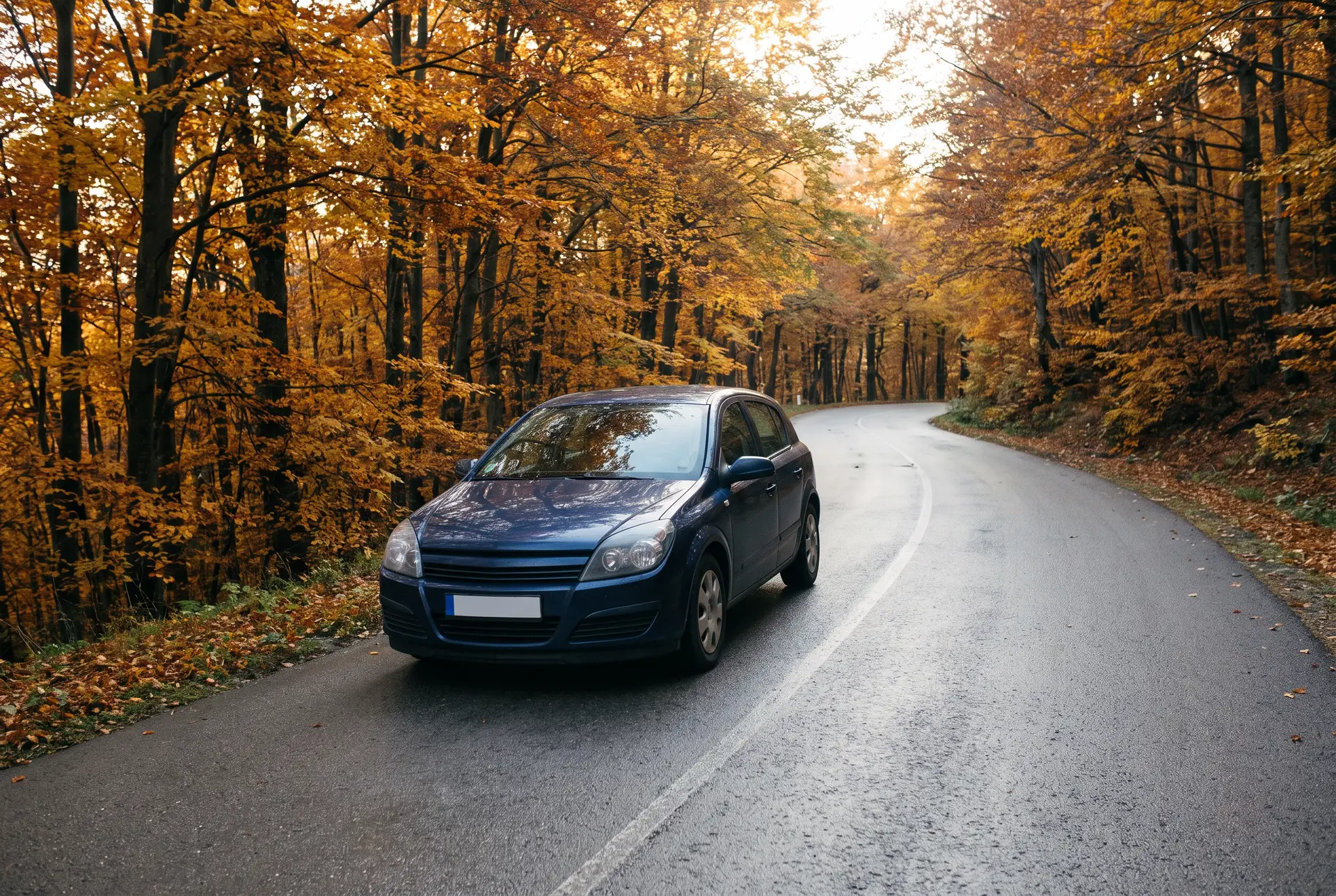
 Image generated by AI
Bulgaria
Car hire in Bulgaria
From €6 a day on a 7-day rental and from €7 for a single day, as of November 4, 2026, among cars with a deposit of up to €300: four airports, town offices and delivery to your hotel.
from €6 per day on a 7-day rental
from €7 for a single day, as of November 4, 2026
Search and book
A live catalogue with prices and availability for your dates. You pay part of the total when you book and the rest on collection. Your rental contract is with the rental company.
Ad · companies may pay Roamo for referrals
Do you need a car in Bulgaria?
Not everyone does. For a few days in Sofia or Plovdiv, the centre is easier on foot and a car would spend its time in a paid car park. If your whole holiday is one beach in one resort, you may not need a car either.
A car pays off when your plans include more than one place: Rila Monastery and Bansko from Sofia, Veliko Tarnovo on the way between the capital and the coast, Old Nesebar and Sozopol from Burgas, Balchik from Varna. With a car you can see two or three of them in a day.
If you need a car for only part of the trip, spend the first days without one and then have it brought to your hotel: many cars offer delivery to an address.
How much does car hire in Bulgaria cost?
Cars start from €6 a day on a 7-day rental and from €7 for a single day, as of November 4, 2026: that is the lowest price in the country, and it is Sofia’s. These prices were found among cars with a deposit of up to €300. The cheapest offers usually come with a large deposit, so check it on the car’s card straight away.
By city, on a 7-day rental a day costs from €17 in Burgas, from €15 in Varna, from €28 in Plovdiv and from €25 in Sunny Beach, where delivery is in the price. On the coast July and August are the dearest months and winter the cheapest; in Sofia the seasons make less difference. The rental company calculates the exact amount for your dates.
Bulgaria has used the euro since 1 January 2026, and leva have not been accepted since 1 February 2026. On top of the hire, budget for the vignette, parking and fuel. Cards are accepted almost everywhere, but keep a little cash in euros for rural areas.
Where to pick up the car
Cars are handed over at four airports. Sofia (SOF) is about 8 km from the centre at T1 and about 12 km at T2. Burgas (BOJ) is about 13 km from the centre and the closest to Sunny Beach. Varna (VAR) is about 8 km from the centre, and Plovdiv (PDV) about 16 km. Besides the airports, cars are handed over at company offices or delivered to your hotel or the station; each car has its own list of places.
Companies have no cars of their own in Sunny Beach: the car is brought in, and the €30 delivery is in the price. In Bansko cars are also only delivered, so for the mountains people usually hire in Sofia. Early collection and late-night return are possible but may cost extra. The minimum hire is 24 hours, and part of a day counts as a full day.
What you need to hire a car and enter Bulgaria
A passport, the original licence with details in Latin script, a bank card and the booking voucher. A UK photocard licence is enough without an IDP; with an old paper licence, update it before you travel or bring an IDP. EU licences need nothing extra. Age: usually from 21–22 with 2 years’ driving, with a wide choice from 23–24 and 3 years; the exact terms are on the car’s card.
You pay 15–20% when you book and the rest at collection. Free cancellation is up to 7 days before the hire, or up to 24 hours with the free-cancellation option; a 6% payment fee is kept. Compulsory insurance is in the price; standard cover excludes tyres and wheels, the underbody, the windscreen and the interior, and after an accident you need a police report. Cars may be driven only on paved public roads. How to read the insurance and deposit terms is explained in insurance and deposit explained; the logic is the same.
Entry: UK passport holders need no visa for up to 90 days in any 180. The passport must have been issued less than 10 years ago and be valid for 3 months after you leave the Schengen area, and under the Entry/Exit System your fingerprints and photo are taken on entry. EU citizens can travel on an ID card. On an EU SIM, roaming is at home rates; UK networks are not covered by that rule, so check your tariff.
The vignette, road rules and winter driving
Roads between towns need an electronic vignette; there are no stickers any more, as it is linked to the number plate. On 4 November 2026 a week cost €10, a weekend €6.60 and a day €5.30 (official site bgtoll.bg). Hire cars usually have one already: check the plate on bgtoll.bg or ask when you collect. Plates are checked by 295 fixed cameras and 105 patrol vehicles; without a vignette you will be offered a compensatory charge of €46.50 on the spot, otherwise the fine is €153.39.
Traffic drives on the right. Limits are 50 km/h in towns, 90 outside them, 120 on expressways and 140 on motorways, unless signs say otherwise; on some roads speed is measured as an average over a section. Headlights or daytime running lights are on at all times, all year. The alcohol limit is 0.5 per mille, but it is better not to drink at all. Children under 150 cm need a car seat or booster. Under the Road Traffic Act, on 4 November 2026 going 11–20 km/h over the limit cost about €26, 31–40 km/h over in town about €205, holding a phone or not wearing a seatbelt about €51 and running a red light about €77.
From 15 November to 1 March you need winter tyres or at least 4 mm of tread. In winter the Shipka and Troyan passes are closed after heavy snow, sometimes for several days, so check conditions on the Road Infrastructure Agency’s website (api.bg) before you set off. Parking in central Sofia, Varna and Burgas is paid, with the hours and price on the sign, and text payment works only with a Bulgarian number. Stick to the main roads, avoid driving out of town at night, and fill up in town before heading into the mountains.
Where to go by car
From Sofia: Boyana Church and its frescoes (about 9 km), Vitosha Nature Park above the city and Rila Monastery (about 127 km, about 2 hours). East along the Trakia motorway lie Plovdiv (about 144 km) and, further on, the coast at Burgas (about 385 km, about 4 hours). Between the capital and the sea is Veliko Tarnovo with Tsarevets fortress, about 3 hours from Sofia and from Varna.
On the coast the car links the resorts: Old Nesebar and Sozopol from Burgas, Golden Sands and Balchik, with its palace and botanical garden, from Varna. Burgas and Varna are about 129 km apart, about 2 hours.
Abroad: only in a car the company allows across the border, arranged before you book. There have been no checks on the Greek and Romanian borders since 1 January 2025, but carry your passport anyway. The bridges into Romania are tolled: on 4 November 2026 the crossing from Ruse cost €2 on the official tariff, and Vidin–Calafat €6 each way according to the bridge operator. The rule is stricter in the other direction: hire cars from Greece and Turkey are usually not allowed into Bulgaria.
Good to know
See the price before you pay
The catalogue shows the total for your dates before you pay, along with the deposit and rental terms.
The deposit up front
The cheapest cars usually carry a large deposit: the amount is on the car’s card, and some cars have none.
Four airports
Sofia, Burgas, Varna and Plovdiv: collection at the airport, and in town at offices or delivered to your address.
How it works
Choose dates and a car
See what is free on your dates and compare the deposit, insurance and cross-border permission.
Pay 15–20% up front
The advance is paid when you book, the rest at collection. The contract and payment are with the rental company.
Collect the car
At the airport, an office or your address, at the time you chose when booking.
Conditions
- Driving licence
- Passport, original licence with details in Latin script and a bank card, plus the booking voucher, which can be on your phone. The licence must be valid until the end of the hire; copies and digital licences are not accepted. UK photocard and EU licences need no IDP; with an old UK paper licence, update it or bring an IDP.
- Age and experience
- Usually from 21–22 with 2 years’ driving; the wide choice starts at 23–24 with 3 years. The exact terms are on the car’s card.
- Deposit
- Depends on the car. The cheapest offers usually come with a large deposit, so the prices on this page were found among cars with a deposit of up to €300. Some cars have no deposit, and some can be taken without a credit card: this is shown when you book.
- Insurance
- Compulsory insurance is in the price; extended cover can be added, with its price on the car’s card. Standard cover excludes tyres and wheels, the underbody, the windscreen and the interior. After an accident, tell the company straight away and get a police report, or the insurance is void.
- Crossing borders
- Not on every car, and only by arrangement: say so before you book, choose a car with that option and check that the trip and Green Card insurance are in the contract. It is usually a paid option. For Turkey, ask before you book: it is rarely allowed.
- Fuel
- Return the car with the same level as at collection. If it is lower, you pay the company’s rate for the difference; if higher, nothing is refunded.
- Season
- Most cars are booked for July and August, and the coast is busy from May to September, so book those months early, particularly in Burgas and Varna. Winter and late autumn are the cheapest. By law, from 15 November to 1 March cars need winter tyres or at least 4 mm of tread, and the mountain passes are closed after heavy snow.
By city
Common questions
How much does it cost to hire a car in Bulgaria?
From €6 a day on a 7-day rental and from €7 for a single day, as of November 4, 2026; these prices were found among cars with a deposit of up to €300. On the coast July and August are the dearest months and winter the cheapest. The rental company calculates the exact amount.
Do I need a vignette?
Yes, for roads between towns. On 4 November 2026 a week cost €10, a weekend €6.60 and a day €5.30 (official site bgtoll.bg). Hire cars usually have one already: check the number plate on bgtoll.bg or ask when you collect. Without a vignette you will be offered a compensatory charge of €46.50 on the spot; otherwise the fine is €153.39.
Do I need winter tyres?
By law, from 15 November to 1 March you need winter tyres or tyres with at least 4 mm of tread. If you are heading for the mountains, ask for a car on winter tyres, and check with the company about snow chains.
Is my UK driving licence valid in Bulgaria?
Yes. A UK photocard licence is valid without an IDP. If you still have an old paper licence, update it before you travel or bring an IDP. EU licences need nothing extra. Rental companies can set their own conditions, so check the car’s card.
Do I need cash?
Not much. Bulgaria has used the euro since 1 January 2026, and leva have not been accepted since 1 February 2026. Cards are accepted almost everywhere and most cash machines take international cards; keep a little cash in euros for rural areas. Cash of €10,000 or more must be declared.
Can I drive to Greece, Romania or Turkey?
Greece and Romania: in a car the company allows abroad, arranged before you book and usually for a fee; the Green Card must be in the contract. There have been no checks on those borders since 1 January 2025, but carry your passport. Turkey is rarely allowed, so ask in advance; it is the external Schengen border, with full passport and customs checks.
Can I return the car in another city?
Yes, if the company agrees; delivering the car to the other city is included in the price, which is shown when you book.
Is driving in Bulgaria different from driving at home?
Traffic drives on the right, and headlights or daytime running lights must be on all year round. The limits are 50 km/h in towns, 90 outside them, 120 on expressways and 140 on motorways, unless signs say otherwise. The alcohol limit is 0.5 per mille, but it is better not to drink at all. Children under 150 cm tall need a car seat or booster.